Maintenance: keeping a fence sound through the year
Dated notes, season by season, on keeping a fence straight, sound and safe. Most of what the sources describe starts small and out of sight.
A fence is easiest to keep when you look at it on a schedule
This page sets out what a fence needs once it is standing, arranged by the time of year when each check does the most good. It is for a homeowner who already has a fence, or who is about to choose one and wants to know what the upkeep will ask of them. Nothing here reports a job or a visit. These are our own notes on the subject, drawn from the public sources named where they matter. For questions this page cannot settle, the contact page explains who to ask for what.
The material decides most of the work. A wood fence asks for attention at the ground line and at every cut end. A vinyl or aluminum fence mostly asks that its finish and its hardware stay intact. A chain link fence depends on its tension bands and top rail. Cedar is the one we cannot yet give a sourced lifespan for, so the sensible step is to ask any installer for a written figure rather than trust one from us.
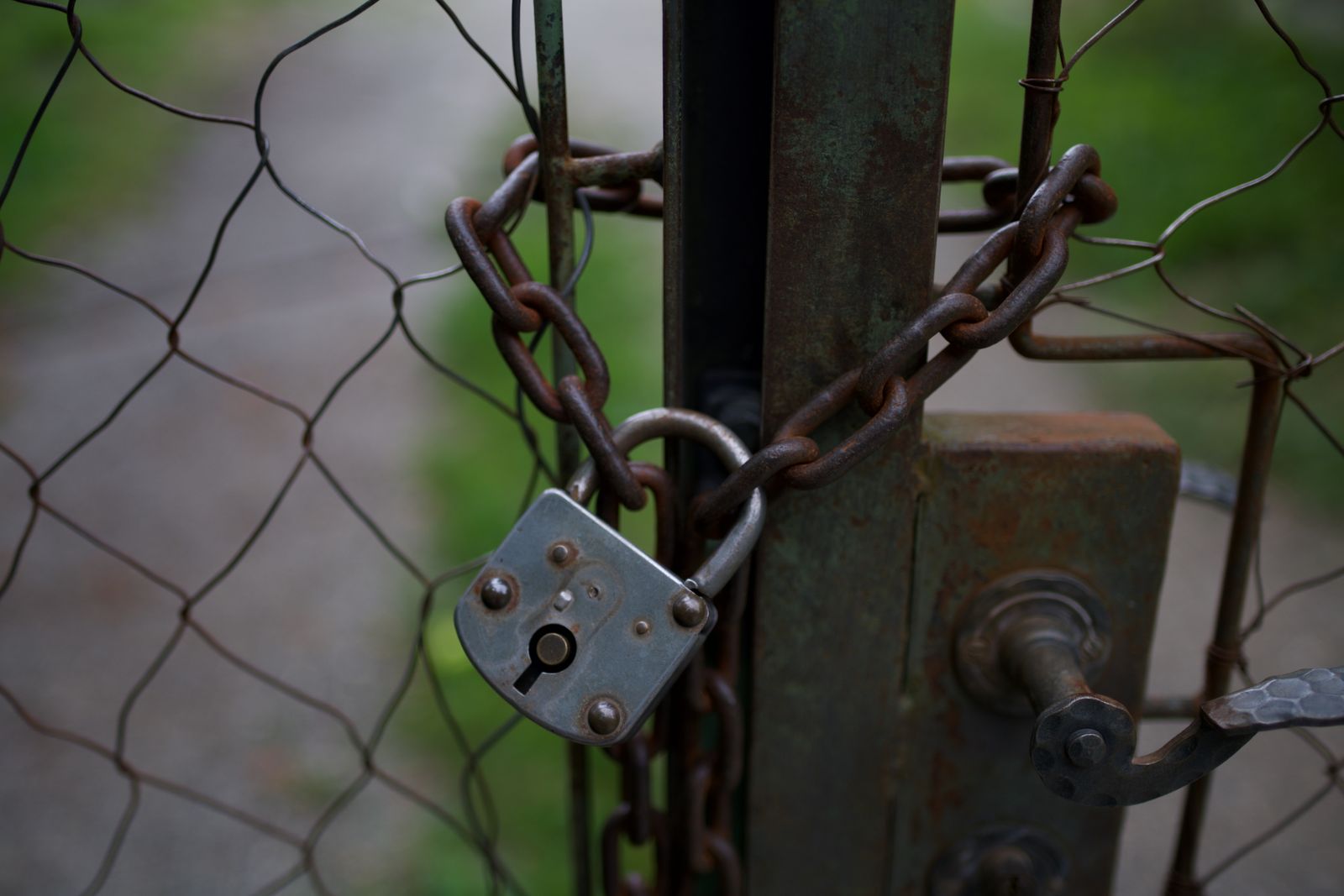
Gate hardware is easy to overlook. The rust in this picture is the kind a spring check is meant to catch while it is still surface staining.
Late winter and spring: the post at the ground line
A post that was only dip-treated is unsuitable for long-term use and rots first at the ground line, so that is where to look once the frost is out. A University of Kentucky Cooperative Extension publication on fence posts (FORFS 03-05) gives 20 to 35 years for properly treated and installed pine, and 3 to 7 years for untreated pine. Those are not Massachusetts figures, and freeze-thaw and wet soil may shorten them.
If you trim a treated post to height, or cut its top to slant it, the cut end is bare wood. The same guidance says that cut end must be re-treated with a wood preservative. Painted posts need time too: they should air-dry for a few months before paint goes on, or moisture can rot the wood under the paint.
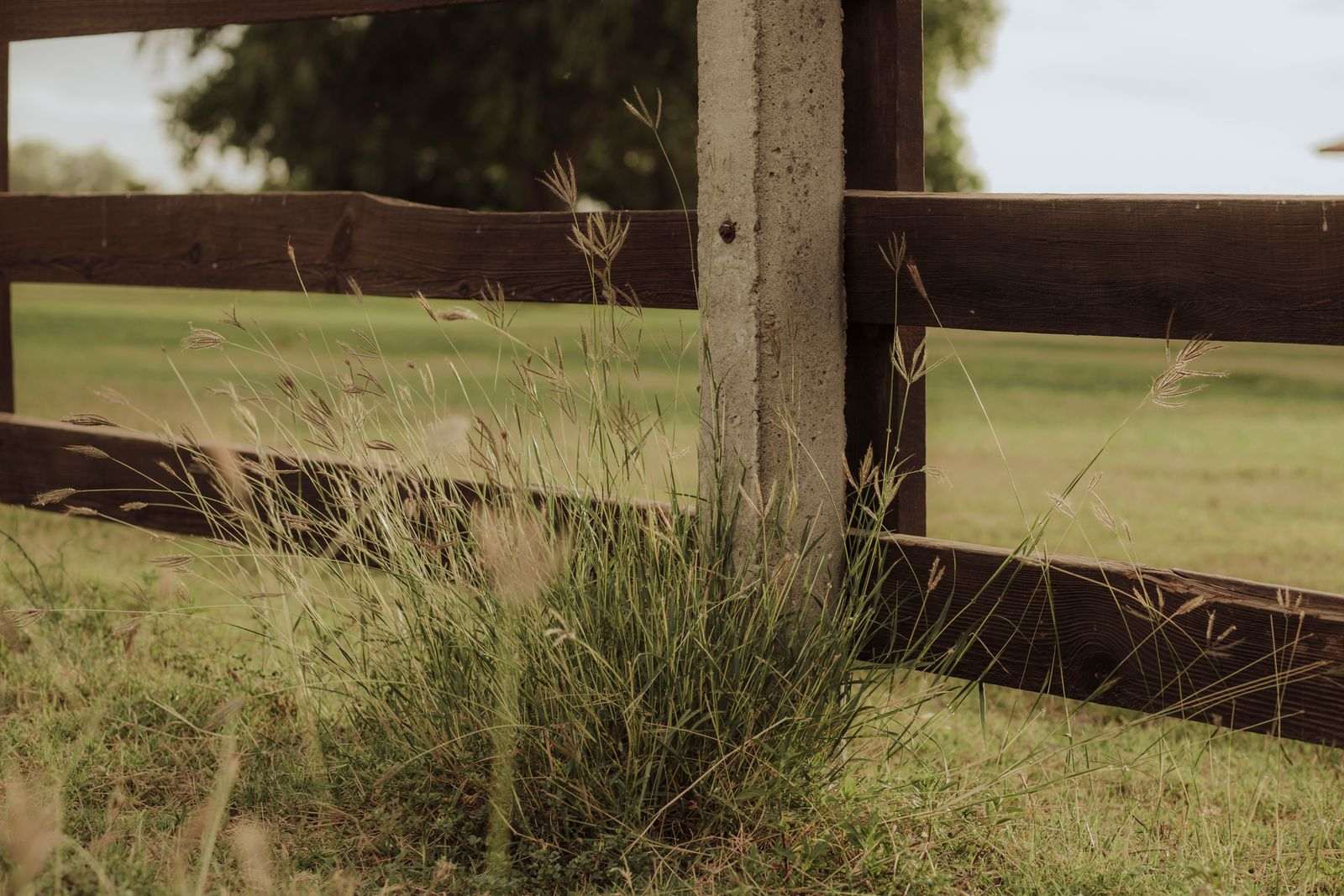
Rails and a concrete post in tall grass. In spring, check the ground line, and any end you trimmed over the winter.
Summer and autumn: gates, hardware and the ground before it freezes
Summer is when a gate shows its faults, because it is opened every day. A latch that no longer catches, a hinge that drops, or a gate that drags across the lawn is a maintenance job, not a cosmetic one. Check these on a dry day and tighten or replace whatever has moved.
If the fence is a pool barrier, the gate is a code requirement in its own right. As the Town of Plymouth Office of Inspectional Services prints the state code, a pedestrian gate must open outward, close itself and latch itself, and the barrier top must sit at least 48 inches above finished ground with no more than 2 inches of clearance beneath it. Soil settles, so that bottom gap is worth measuring. Towns may be stricter than the text it quotes.
Before the ground freezes in autumn, walk the line once more. Look for posts that have started to lean, rails that have pulled out of their brackets, and bare wood where a cut or scrape has not been treated. A leaning post is easier to straighten while the soil is still soft than after a frost has shoved it.
Gate latch and hinges: the gate should close and latch unaided.
Post line: any lean is a reason to look at the ground line.
Cut ends: re-treat any bare wood before the wet months.
Fasteners: rust staining at a bracket is worth a second look.